Use Cases
Capture real traffic and convert to routes
Capture representative production-like flows through a running server and turn real responses into reusable mock endpoints.
Purpose
Convert observed traffic into local route coverage with minimal manual endpoint authoring.
Where this is used
- Bootstrapping mocks for existing user journeys.
- Capturing fallback behavior before upstream changes.
- Preserving important payload examples for regression checks.
Setup and prerequisites
- Running server with real backend URL configured.
- Recording filters reviewed (paths, methods, status codes).
- Redaction settings configured for sensitive headers/body fields.
Step-by-step workflow
- Start server and enable traffic recording in top bar.
- Run target client flow (app screens, curl scripts, integration checks).
- Stop recording and review summary counts.
- Open generated endpoints and verify route/method/body accuracy.
- Resolve conflicts and adjust active variants for same-route cases.
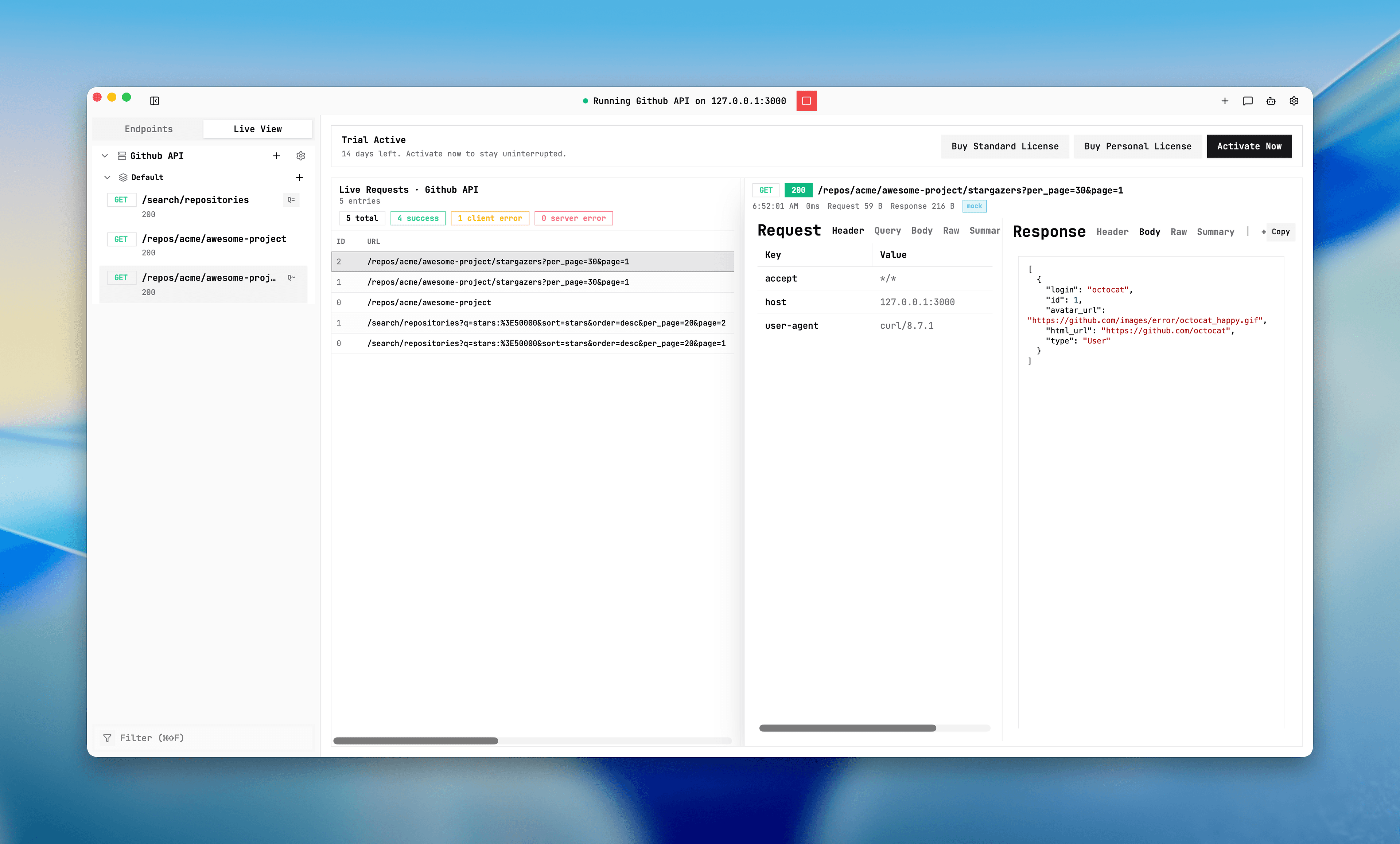
- Re-run flow against newly generated mocks and validate behavior in Live View.
Expected result and output
- Mock endpoints are added from captured records.
- Conflict count increases when captured routes already exist.
- Redaction count reports how many fields were masked before persistence.
- Captured endpoints are available immediately for mock-only development flows.
Common issues and fixes
- No output endpoints: widen filters or re-run with status code filter cleared.
- Sensitive values still visible: enable redaction toggles and include required header names.
- Conflicts too high: switch to `CREATE_NEW_CASE` when you want existing active routes auto-disabled.
For feature-level controls, reviewTraffic recording.
Capture and convert flow
Screenshot placeholder
Placeholder: start recording, run traffic, stop recording, and inspect created endpoints.